 Full audit
Example · Full audit: photos plus an in-hand inspection · Planned, not open yet
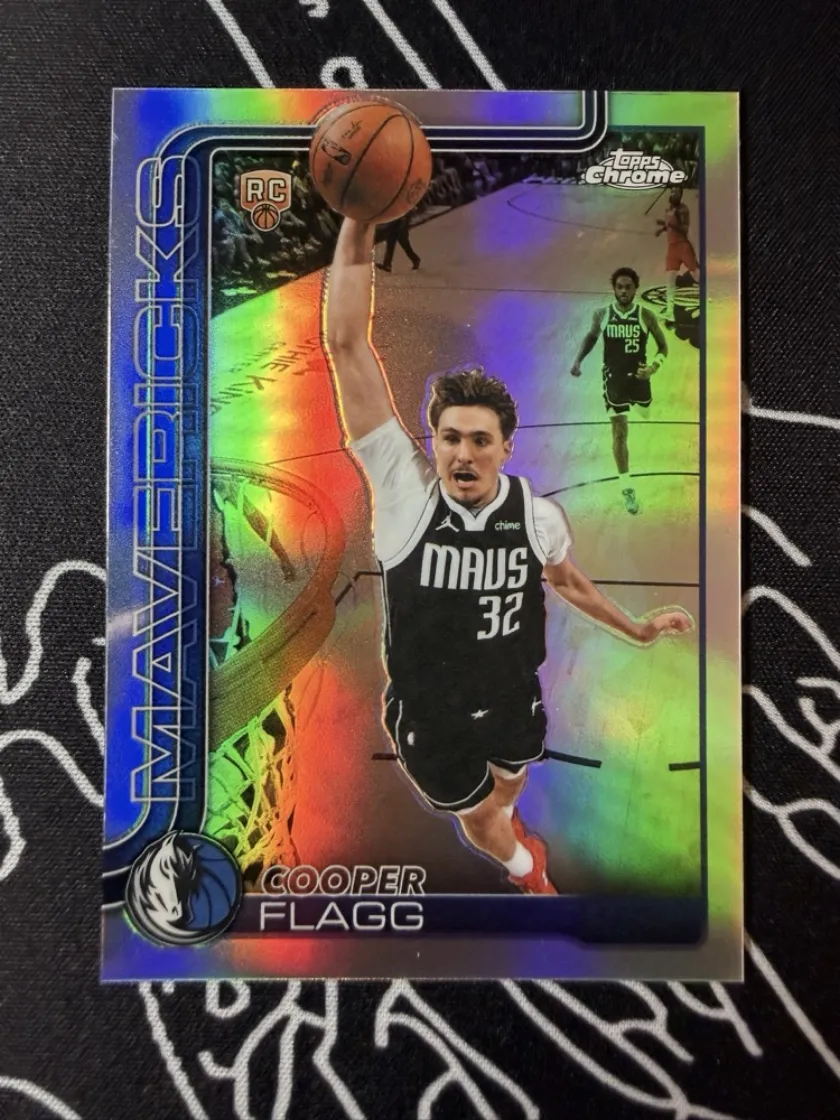
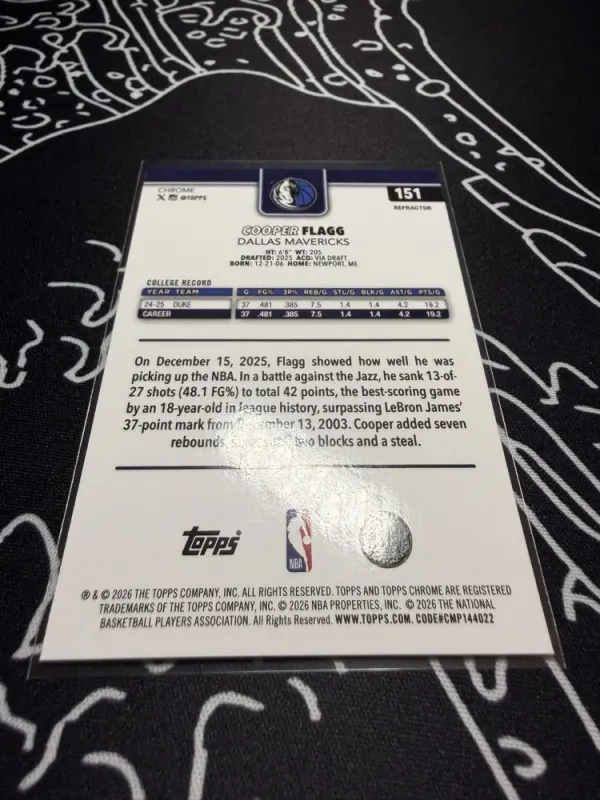
Cooper Flagg #151
’25–26 Topps Chrome Update · Rainbow Refractor · RC · Dallas Mavericks
An example of a Shingan™ full audit, on a real card: the founder’s own. It is more than a Level 1 photo audit. Twelve photographs were read, and then the card was inspected in hand, and the two reads are combined into one consensus. Shingan is not open to the public yet, and nothing on this page can be ordered.
Consensus grade potential 9.3 Immaculate
Potential range 8.0 to 10.0 · most supported: 9 Immaculate
Where this card could land on Shingan’s own scale, one to ten. It is potential, never a grade. Level 3, done in hand and sealed with the card in a Shingan slab, will be the only level that grades, and this page is not that.
- 10ApexViable, the high end
- 9ImmaculateMost supported
- 8CrispPossible floor
- 7CleanLittle support below 8
- 6Steady
- 5Fair
- 4Worn
- 3Heavy
- 2Rough
- 1Salvage
Two reads, one consensus
-
The photographs
Potential 8.4 · Crisp
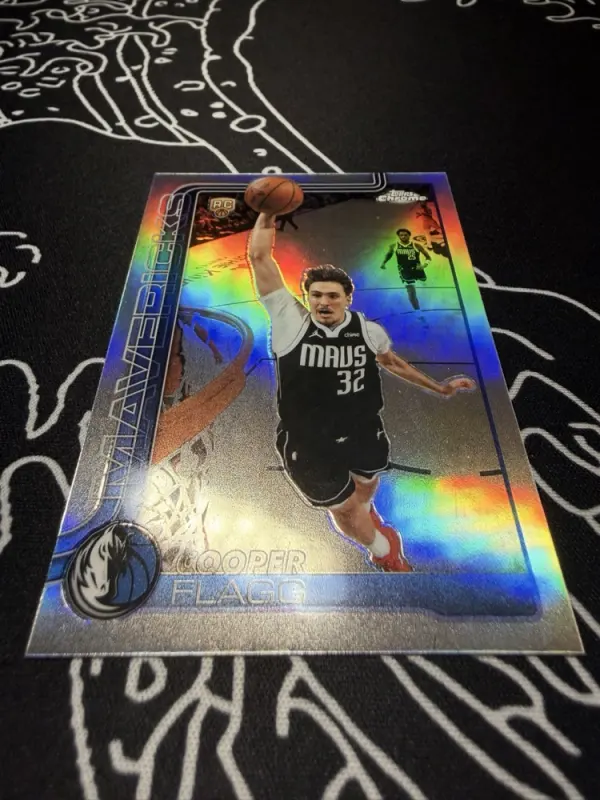
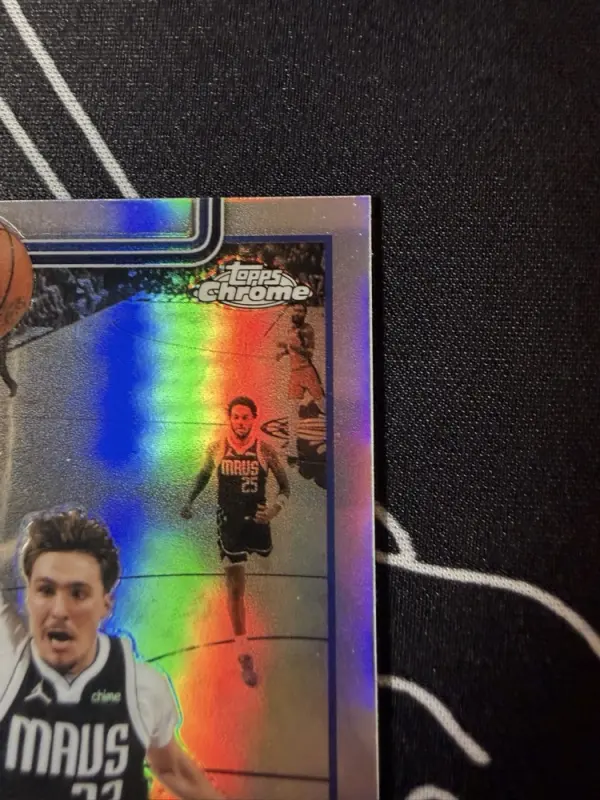
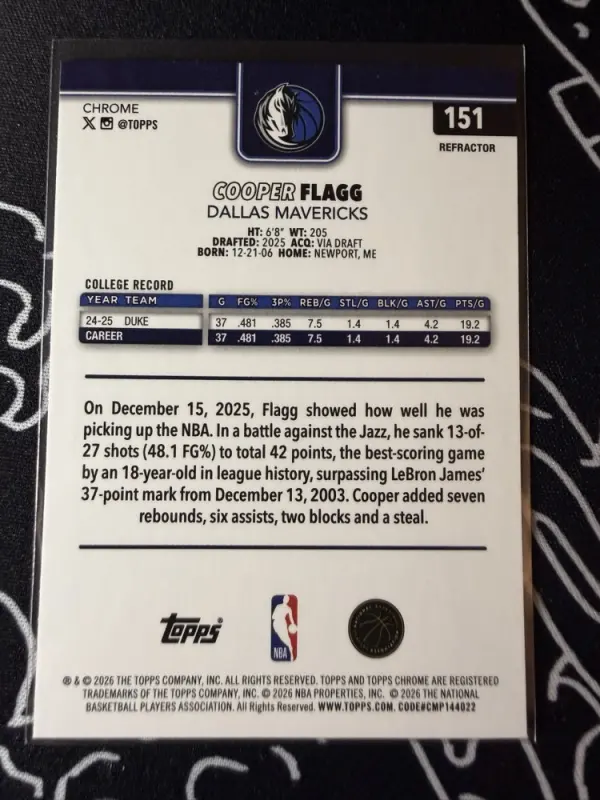
A Level 1 photo audit read all twelve photographs, three times. On its own it gave a potential range of 7 to 9, most supported 8. Glare hid the corner tips, the surface and the holo, and the photographs could not settle the centering.
-
The inspection in hand
Four criteria scored in hand
Next, the owner inspected the card in hand. Corners, surface and print were scored where the photographs could not see, and the centering was measured with a centering tool. Edges and cut were checked in hand but not re-scored, so the consensus keeps the photographs’ score for both.
-
The consensus
Potential 9.3 · Immaculate
The house rule: wherever a criterion was scored in hand, the consensus takes the in-hand score; where it was not, it takes the photographs’. Shingan’s own potential rules then run over those six.
Six criteria
The consensus finding for each, in plain words, and where it came from.
- Centering Measured in hand
- Measured with a centering tool: the front close to even, with the left side the wider one and top and bottom even; the back even all round. The figures are in the table below. The photographs had only estimated it, and read the right side as wider.
- Corners Scored in hand
- No damage at any corner. The photographs showed sharp points but lost the very tips to glare; in hand, all four are clean.
- Edges Photo score kept; not re-scored in hand
- Along the front’s right edge, the photographs saw faint light speckling. Checked in hand, the edges are clean, with no edge wear, but the edges were not re-scored: the consensus keeps the photographs’ score.
- Surface Scored in hand
- No marks, front or back, with the back checked out of the sleeve. The photographs saw small specks and sleeve glare they could not read past.
- Print quality Scored in hand
- Checked in hand under 30× magnification, slowly across the whole card. It found a possible faint print line at the very top, minimal and visible only at 30×, and nothing else. The back’s text is sharp.
- Cut Photo score kept; not re-scored in hand
- Square, with no taper or wave along any side. The photographs marked the cut down for a thin-looking left margin; measured by hand, the left is the wider side. Cut was not re-scored in hand, so the consensus keeps the photographs’ score, and it is the score most likely to move if it is re-read in hand.
Centering
Neither face could be measured from the photographs: no face showed a clean edge on every side, so both were estimated. On the front’s left and right, the three readings of the photographs disagreed about which side is wider.
The hand measure settles it, and it is the figure the consensus uses. It was taken with a centering tool at mid-height.
| Face and axis | Estimated from the photographs | Measured by hand |
|---|---|---|
| Front, left to right | Not settled: the readings disagreed on the wider side | 53/47, left wider |
| Front, top to bottom | 57/43 | 50/50 |
| Back, left to right | 50/50 | 50/50 |
| Back, top to bottom | 54/46 | 50/50 |
Four of the twelve photographs
The photo audit will ask for the front and back square on, each tilted to the light, and every corner close up.
What each read can settle
Settled in hand
What the photographs could not.
- The corner tips the glare hid.
- The surface under the specks and the sleeve glare, front and back.
- Print, under 30× magnification: at most a faint line at the very top, visible only at 30×, which the photographs could not show.
- Which side of the front is wider, and by how much.
Left for Level 3
What neither read here settles.
- The card’s exact dimensions, measured to tolerance.
- Whether the card has been cleaned, pressed, trimmed or otherwise altered. No photograph can rule that out, and this inspection was the owner’s own; Level 3 will be the inspection meant for it.
- Anything beyond potential. Everything on this page is potential, never a grade.
Planned, not open yet. Nothing on this page can be ordered, and no audit is sold.